
Best Practices for Commercial HVAC Installation in DFW
A Guide for General Contractors
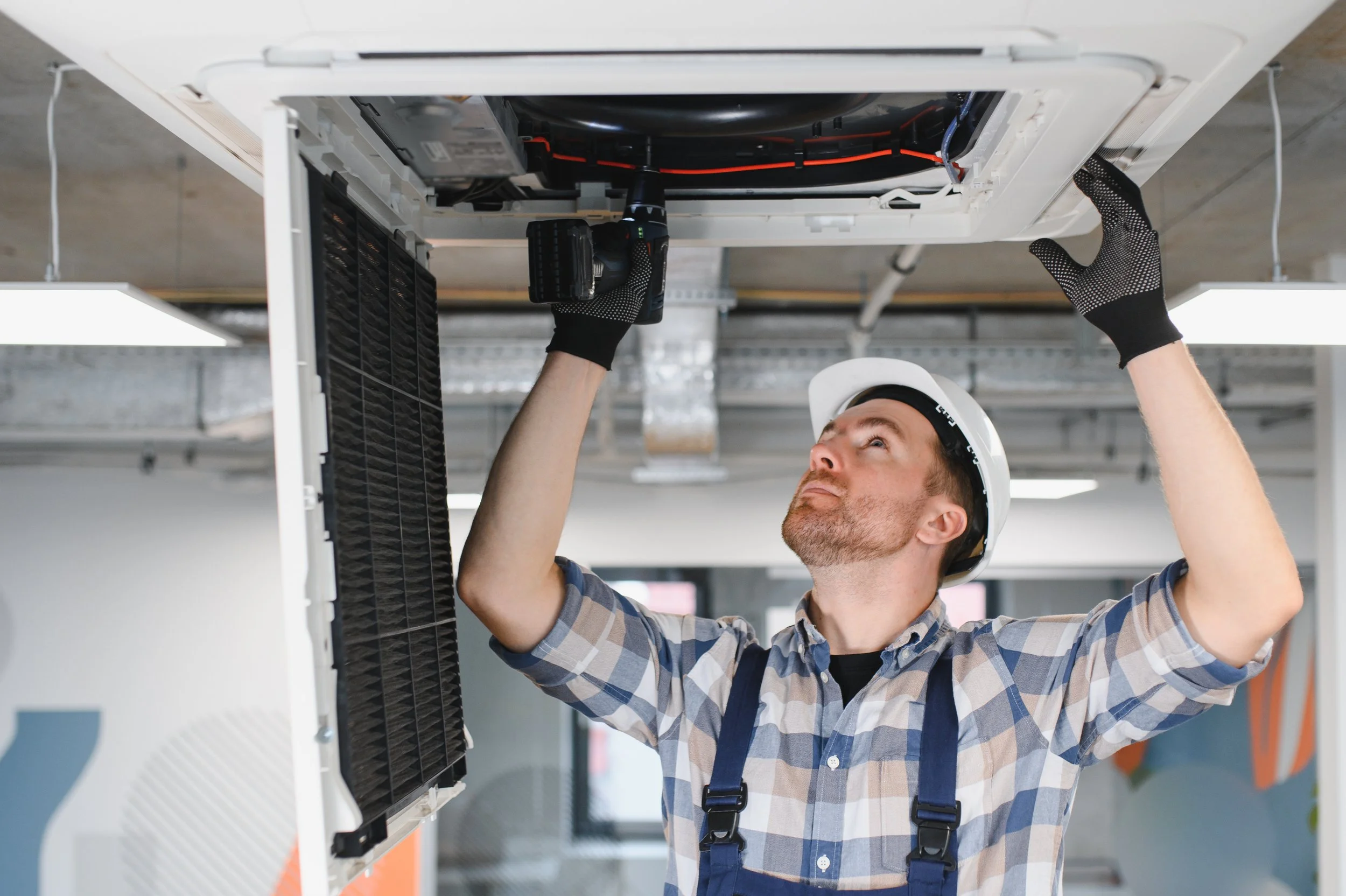
Commercial general contractors in the Dallas-Fort Worth metroplex operate in one of the most demanding construction environments in the United States. A well-executed mechanical installation directly impacts project profitability, client satisfaction, and long-term building performance. With extreme summer temperatures regularly exceeding 100°F, humidity levels that accelerate galvanic corrosion, and expansive clay soils that shift foundations, every decision must be surgical.
At IMSI Mechanical—a 100% veteran-owned and Service-Disabled Veteran-Owned Small Business (SDVOSB)—we bring NASA-level mission-critical precision to the job site. Having completed over 200 mechanical projects across healthcare, education, and industrial sectors, we have codified the following best practices to help GCs avoid "hot calls," eliminate change orders, and deliver systems that thrive in the North Texas heat.
Phase 1: Environmental Risk Mitigation and Site Preparation
The success of a mechanical project is often decided before the first duct is hung. The region's "Black Giant" expansive clay soil can expand or contract by up to 15% seasonally. If equipment pads aren't engineered for this movement, refrigerant lines will pinch, and rooftop units (RTUs) will lose their level, leading to improper drainage and compressor failure.
Critical Site Actions:
- Geotechnical Integration: Require a full structural load analysis at the schematic design phase. Ensure equipment pads use reinforced "floating" slabs or piers tied to stable strata to prevent differential settlement.
- Flood and Drainage Strategy: For sites near the Trinity River basin or low-lying areas in Las Colinas, elevate ground-mounted equipment 12–18 inches above the 100-year flood plain. Install perimeter French drains with redundant sump pumps to prevent "swamping" of outdoor condensers.
- Wind Load Specifications: In high-wind corridors near DFW Airport and Alliance, specify wind-rated equipment curbs. All installations should meet or exceed Texas Windstorm Insurance Association (TWIA) standards for 90-110 mph gusts.
Phase 2: Climate-Specific System Selection
In North Texas, "standard" efficiency is a recipe for failure. The cooling season lasts from late March through October, meaning equipment run-times are significantly higher than the national average. We recommend selecting systems based on specific asset classes to maximize efficiency:
- Class A Office (Frisco/Plano): We recommend Variable Refrigerant Flow (VRF) systems. These provide simultaneous heating and cooling across different zones, often resulting in up to 35% energy savings compared to traditional systems.
- Industrial/Warehouse (I-35 Corridor): High-efficiency Packaged RTUs are the standard here. When equipped with high-quality economizers, these units take full advantage of "free cooling" during the North Texas shoulder seasons.
- Healthcare/Lab (Medical District): These facilities require 100% Outside Air Systems (DOAS). We specify MERV-14 filtration and UV-C disinfection to maintain strict infection control and ASHRAE compliance.
Always specify equipment that exceeds IECC 2021 minimums (SEER 14+, EER 11+, and IEER 12+). IMSI Mechanical utilizes TRACE 700 software to provide GCs with detailed lifecycle cost comparisons, allowing you to present clear ROI data to the building owner during the value-engineering phase.
Phase 3: BIM Coordination and Conflict Resolution
Clashes between mechanical, electrical, plumbing (MEP), and fire suppression systems are the leading cause of schedule "slip." In a market where labor is at a premium, field-fixing a pipe-duct collision is an avoidable drain on the contingency budget.
The IMSI Coordination Protocol:
- BIM Level 300: Mandate Revit models with automated clash detection before 50% design development.
- Prefabrication Strategy: Utilize off-site pre-fabricated duct and pipe racks. These arrive color-coded and pre-insulated, which can reduce on-site field labor by up to 40%.
- The "Live Building" Approach: For renovations in downtown Dallas or historic Fort Worth, we deploy temporary portable cooling and strict phased tie-in schedules. This ensures zero comfort disruption for existing tenants and protects the owner’s rental income during construction.
Phase 4: Precision Installation Standards
In a climate where humidity often hits 80%, the "small things" in an installation become massive failure points over time.
Engineering Standards for Longevity:
- Airtight Ducting: We seal ductwork exclusively with UL-181 mastic. We never rely on tape, which fails under the sustained 140°F temperatures found in unconditioned Texas attic spaces or mechanical rooms.
- Nitrogen Purging: All refrigerant line brazing is performed under a continuous nitrogen purge. This prevents internal oxidation (scale), which is the primary cause of TXV valve failure and premature compressor burnout.
- Condensation Control: We utilize ¾-inch closed-cell foam insulation with UV-protective jacketing. In high humidity, standard thin-wall insulation will "sweat," leading to mold growth and ceiling damage.
- Vibration Isolation: Use spring-type isolators on all rotating equipment. This not only reduces noise for occupants but protects the equipment from the micro-stresses caused by building settlement.
Phase 5: Testing, Adjusting, and Balancing (TAB)
A system is only as good as its calibration. Third-party commissioning is a non-negotiable standard for any reputable project. IMSI Mechanical performs "Stress Test Commissioning." We simulate 105°F ambient conditions using load banks to ensure the system doesn't trip on high-head pressure during the first real Texas heatwave.
The Handover Package includes:
- Full airflow balancing and static-pressure profiling.
- Digital as-builts in Revit format for the facility manager.
- A "Mission Critical" 12-month labor warranty and interactive O&M manuals.
- Hands-on training for the facility team on the Building Automation System (BAS).
Avoiding Common Pitfalls for General Contractors
To keep your project on track, watch for these specific "Project Killers":
- Supply Chain Lag: Specialty VRF components and custom AHUs currently have long lead times. Place equipment orders 90–120 days in advance and maintain active communication with local distributors.
- Missed Rebates: Many GCs overlook regional energy efficiency programs. Incorporating Energy Recovery Ventilators (ERVs) can qualify a project for rebates up to $0.18 per verified kWh saved, often covering the cost of the equipment upgrade itself.
- Inadequate Humidity Control: Ensure your partner understands "Latent Load" vs. "Sensible Load." In North Texas, a system that cools the air too quickly without removing moisture will result in a "cold and clammy" building prone to microbial growth.
Conclusion: Engineering for Reliability
General contractors who prioritize these best practices consistently deliver buildings that are cheaper to operate and easier to maintain. At IMSI Mechanical, we don't just install equipment; we engineer reliability. By treating the mechanical system as a mission-critical component rather than a commodity, you protect your reputation and the owner's investment.
Ready to partner on your next project? Contact is for expert pre-construction support, detailed budgeting, and flawless execution.