
Common Commercial Backflow Prevention Repairs and Maintenance
Tips in Dallas-Fort Worth for General Contractors
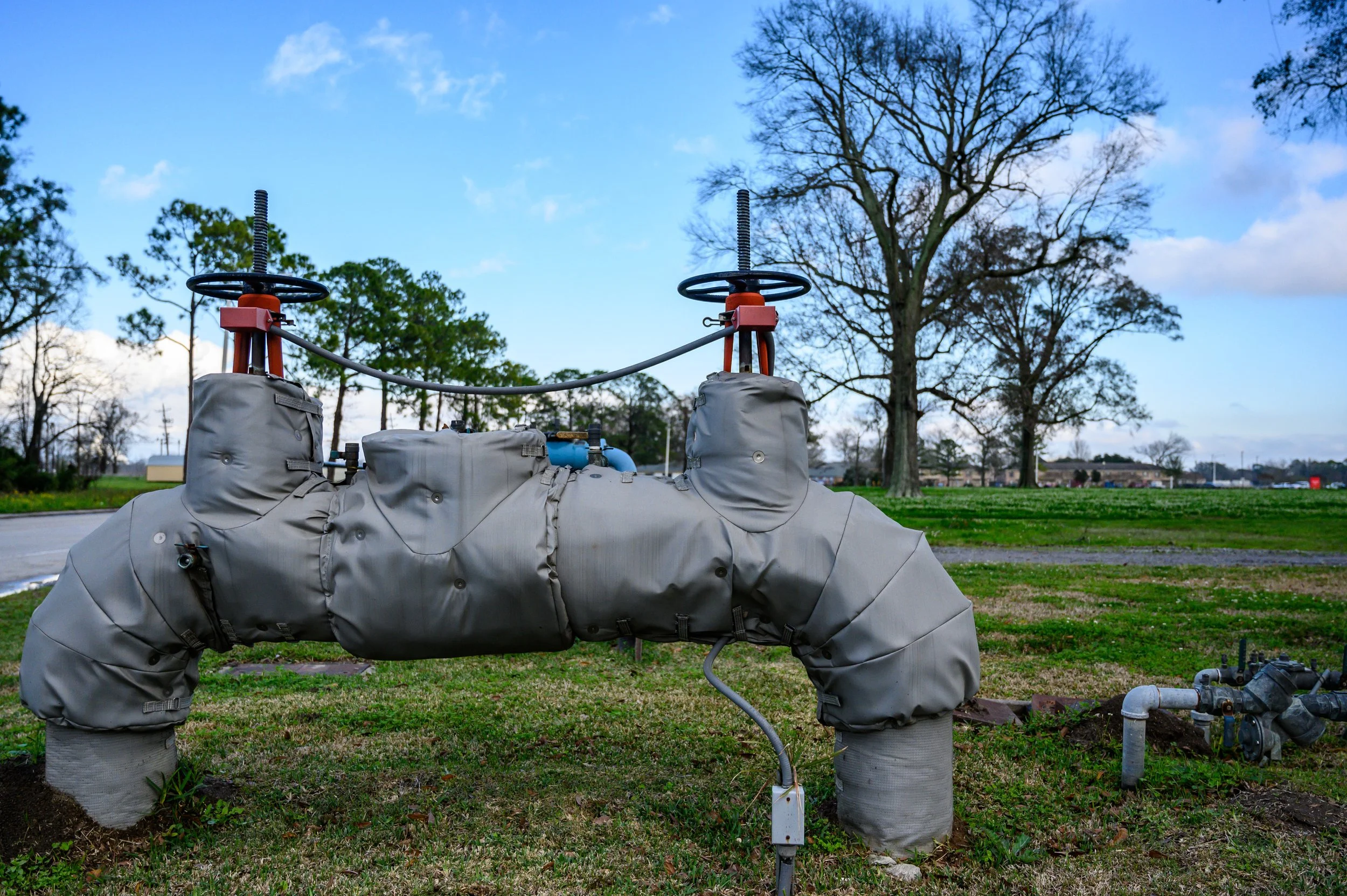
Backflow prevention failures in North Texas are more than a plumbing nuisance—they are a project-stopping liability. A failed assembly can trigger immediate water-service shutoffs, TCEQ fines up to $5,000 per day, and insurance claim denials. For a general contractor, an unexpected backflow failure during the warranty period or a tenant fit-out can evaporate project margins and damage client trust.
At IMSI Mechanical, we provide 24/7 emergency response for mission-critical facilities across the DFW metroplex. We see the same recurring failures driven by the region's unique water chemistry and volatile soil. This guide breaks down the top problems and the proactive protocols required to eliminate them.
1. Hard-Water Scaling: The Check-Valve Killer
DFW’s municipal water is notoriously high in calcium and magnesium. This "hard water" creates a rapid mineral build-up inside the Reduced Pressure Zone (RPZ) relief valves and check-valve seats.
- The Symptom: Constant "spitting" or full discharge from the relief valve, indicating that the internal checks are no longer holding the required 2.0 psi differential.
- The Step-by-Step Repair:
- Isolate and depressurize the assembly.
- Remove the relief valve and internal check-valve modules.
- Perform an ultrasonic cleaning or soak in an approved descaler to remove calcification.
- Replace worn rubber seats, springs, and diaphragms (standard rebuild kit).
- Re-assemble and conduct a full functional test using calibrated differential gauges.
- Prevention: Install upstream 100-mesh strainers to catch pipe scale before it reaches the assembly. For high-acuity facilities, we recommend dual-softener systems with an automatic bypass.
2. Relief-Valve Discharge and Mechanical Room Flooding
In North Texas, "Black Giant" clay soil movement can cause a building to shift, stressing the drain lines connected to an RPZ. If an assembly begins to discharge and the drain line is misaligned or undersized, it can flood a mechanical room in minutes.
- The Issue: Standard 2-inch floor drains are often insufficient to handle the "full dump" flow of a 4-inch or 6-inch RPZ.
- Engineering Fixes: We install assemblies on 6-inch reinforced concrete pads with a 2% slope toward high-capacity floor sinks.
- Smart Integration: We integrate overflow alarms into the Building Automation System (BAS) that send an immediate text alert if the relief valve remains open for more than 30 seconds.
3. Freeze Damage in "Blue Norther" Events
While DFW is known for heat, our sudden "hard freeze" events are catastrophic for exposed backflow assemblies in unheated warehouses or rooftop mechanical yards.
- The Damage: Water expands as it freezes, cracking the expensive bronze or stainless-steel body of the valve. Repairs often require a full assembly replacement, costing $2,200 to $7,000.
- Hardening the System:
- Self-Regulating Heat Trace: We wrap the assembly in industrial-grade heat-trace kits that activate at 35°F.
- Insulated Enclosures: Specify ASSE 1060-rated enclosures designed for -10°F protection.
- Emergency Drainage: For rooftop units, we install automatic shut-off valves tied to ambient temperature sensors to drain the unit before the freeze hits.
Proactive Maintenance: The Contractor’s ROI
General contractors who include a structured maintenance plan in their project handover protect their own liability and the client's investment.
IMSI Mechanical Maintenance Tiers:
- Industrial/Warehouse: Quarterly visual inspections and strainer cleaning to prevent debris-driven failures.
- Class A Office/Retail: Semi-annual full functional testing, internal cleaning, and video pipe inspection of the discharge line.
- Critical Care/Healthcare: 24/7 monitoring with a 2-hour arrival guarantee for trauma centers and data centers.
The Financial Impact:
Preventive maintenance typically costs between $0.20 and $0.45 per square foot per year. However, this investment reduces emergency repair expenses by 75% and avoids shutoffs that can exceed $25,000 in lost business productivity.
Industry Insights: Common DFW Infrastructure Trends
While success is measured project-by-project, we observe several consistent performance trends across the North Texas region:
- Corrosion Resistance: Facilities that utilize stainless-steel internally-loaded check valves see 40% fewer "spitting" failures than those using traditional rubber-seated bronze units in DFW's hard water.
- The Soil Factor: Underground assemblies without flexible expansion loops are 60% more likely to suffer sheared fittings within the first 5 years due to DFW’s expansive clay soil.
- Rebate Capture: Many municipalities, including those served by the NTMWD, offer rebates for upgrading to "low-pressure-drop" assemblies, which can save building owners $500–$1,200 per year in pumping energy.
Conclusion: Building for Resiliency
In the competitive DFW market, GCs are increasingly judged on how their buildings perform after the ribbon-cutting. By treating backflow prevention as a mission-critical system requiring proactive care, you deliver a more resilient, lower-risk asset to your clients.
Ready to protect your project’s infrastructure? Contact us for expert repairs, BPAT-certified maintenance, and turnkey compliance support.