
Common Commercial HVAC Repairs and Maintenance Tips in Dallas-Fort Worth for General Contractors
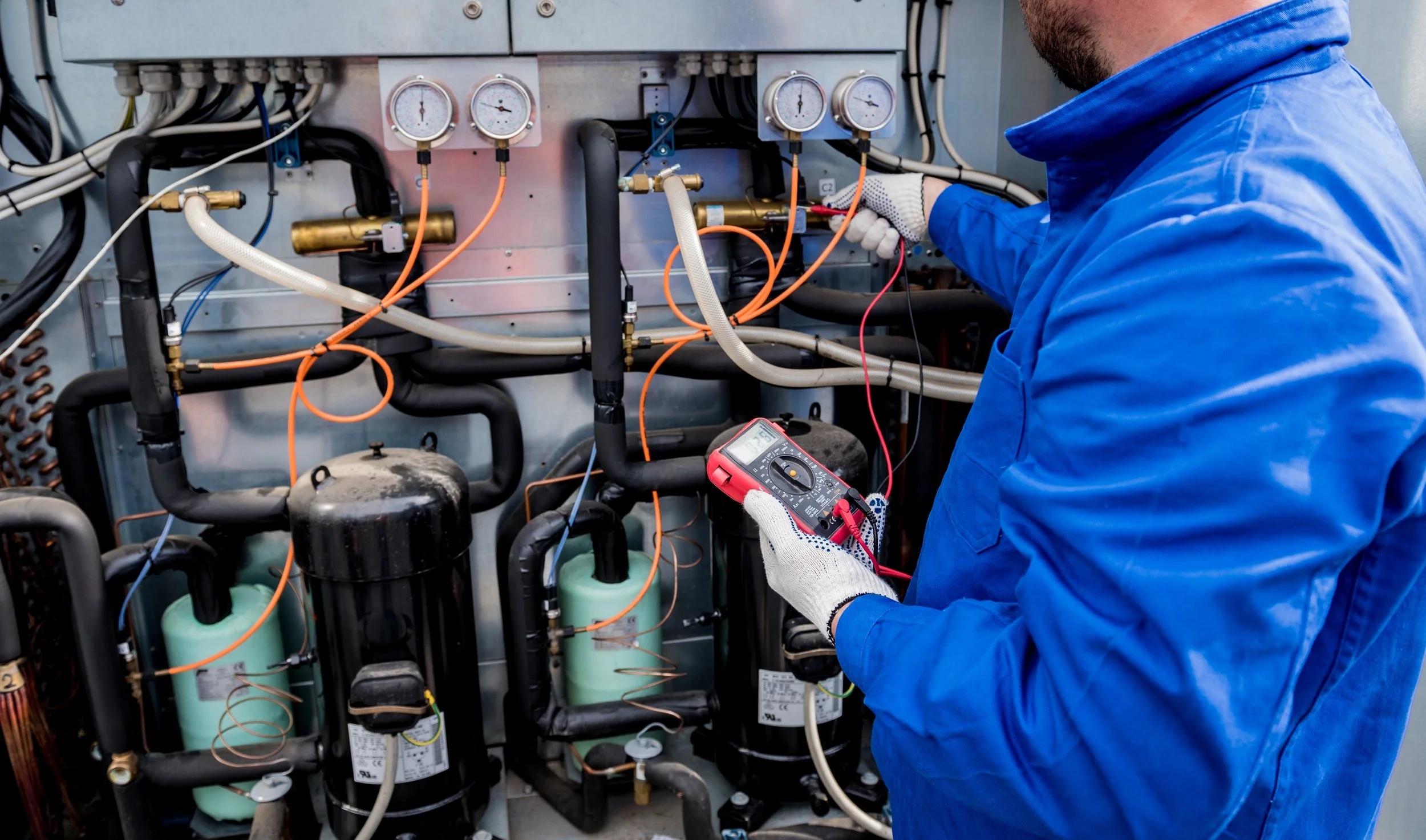
HVAC emergencies during a North Texas summer can cost commercial general contractors thousands of dollars in liquidated damages, lost productivity, and damaged client relationships. In an environment where the design temperature is frequently surpassed for 60 consecutive days, the mechanical system is the heart of the building's viability.
At IMSI Mechanical, we specialize in mission-critical precision for commercial systems. Our 24/7 emergency response teams see the same recurring issues across hundreds of North Texas buildings. This guide breaks down the top failure points, the repair protocols required to fix them correctly, and the ROI of proactive maintenance.
1. Refrigerant Leaks: The Environmental Silent Killer
In the Dallas-Fort Worth area, refrigerant leaks are the most frequent cause of system underperformance. The primary drivers are the region's "Black Giant" expansive clay soils, which create micro-vibrations as the foundation shifts, and the high humidity that accelerates galvanic corrosion on copper-aluminum interfaces.
The Professional Repair Protocol:
When a leak is detected, "topping off" the system is a temporary and often illegal fix. We follow a rigorous restoration process:
- Recovery & Detection: Isolate the circuit and recover refrigerant using EPA-certified equipment. We utilize ultrasonic leak detectors and UV dye to find micro-fissures in the u-bends of the evaporator coil.
- Nitrogen Purge Brazing: We re-braze joints under a continuous nitrogen purge to prevent internal oxidation (soot) that can later clog the thermal expansion valve (TXV).
- Pressure Deceleration Test: The system is pressurized with dry nitrogen to 150 psig and monitored for 24 hours to ensure a true hermetic seal.
- Triple Evacuation: We pull a vacuum down to 500 microns to ensure all non-condensables and moisture are removed before recharging.
2. Compressor Burnout from Thermal Stress
Compressors in the North Texas climate are often forced to run at 100% capacity for 12 to 14 hours a day during peak summer months. High head pressure—caused by dirty condenser coils or restricted airflow—forces the compressor to operate outside its designed "envelope," leading to electrical winding failure.
Prevention & Mitigation:
- Chemical Coil Cleaning: We use non-acidic, alkaline-based foaming cleaners twice annually to remove the heavy North Texas pollen and construction dust that "blankets" the coils.
- VFD Integration: Installing Variable Frequency Drives (VFDs) reduces inrush current by up to 70%, significantly lowering the heat stress on the motor windings during startup.
- Phase Monitoring: We install digital phase monitors to protect compressors from the voltage sags and "brownouts" common during regional grid peaks.
3. Frozen Evaporator Coils and Moisture Damage
A frozen coil is more than a comfort issue; it is a major liability. When a 20-ton rooftop unit thaws, it can release gallons of water, leading to collapsed ceiling tiles and mold growth in sensitive areas like hospitals, schools, or server rooms.
Why it happens in North Texas:
The high humidity in this region means the evaporator coil is constantly removing massive amounts of latent heat. If airflow is restricted by a filter that is clogged with drywall dust or environmental debris, the coil temperature drops below freezing, turning that condensation into a block of ice.
The Solution:
- Sensor-Based Alerts: We install low-temperature "freeze-stat" switches that cut power to the compressor if the coil temperature reaches 34°F.
- Filter Management: In dusty environments, we recommend a transition from 1-inch to 2-inch MERV-13 pleated filters, which provide better surface area and lower static pressure.
4. Electrical Failure and Surge Protection
The DFW metroplex is a high-lightning-strike region. Power surges from summer storms frequently fry contactors, capacitors, and expensive Building Automation System (BAS) boards.
Hardening the System:
- Tiered Surge Protection: We install Type 1 surge protection at the main service entrance and Type 2 protection at the individual equipment disconnects.
- Contact Verification: During annual maintenance, we perform infrared thermography on all electrical terminations to identify "hot spots" before they lead to a catastrophic arc-flash or component failure.
Proactive Maintenance: The General Contractor’s ROI
General contractors who treat HVAC maintenance as a standard project requirement rather than an afterthought protect their margins and their schedules. We recommend the following service frequencies based on project type:
- Industrial & Warehouse Facilities: Quarterly service focused on filter swaps and high-volume coil cleaning due to high dust exposure in heavy-traffic corridors.
- Class A Office & Retail Spaces: Semi-annual service that prioritizes sensor calibration and airflow balancing to maintain tenant comfort and energy efficiency.
- Critical Care & Data Centers: Monthly diagnostics and 24/7 remote monitoring to ensure zero downtime.
The Financial Impact:
Preventive maintenance typically costs between $0.35 and $0.65 per square foot per year. However, industry data shows a 65% reduction in emergency repair costs and a 12–18% reduction in annual energy bills. For most building owners, the program pays for itself within the first year of operation.
Industry Insights: Regional Performance Trends
While every building is unique, the following trends are consistent across commercial developments in North Texas:
- The Dust Factor: Buildings located near active construction zones or high-traffic freeways require 50% more frequent filter changes to prevent static pressure imbalances.
- Soil Movement: Systems using underground refrigerant lines are significantly more susceptible to leaks if flexible expansion loops were not included in the original mechanical design to account for clay soil shifting.
- Airflow Balancing: Over 30% of "hot calls" in newly finished commercial spaces are actually the result of improper airflow balancing rather than equipment failure.
General contractors who lead with a proactive maintenance strategy deliver a "set-it-and-forget-it" experience for their clients.
Ready to protect your next build? Contact us for a free system health assessment or a custom maintenance specification for your project close-out documents.