
Common Commercial Medical Gas Repairs and Maintenance
Tips in Dallas-Fort Worth for General Contractors
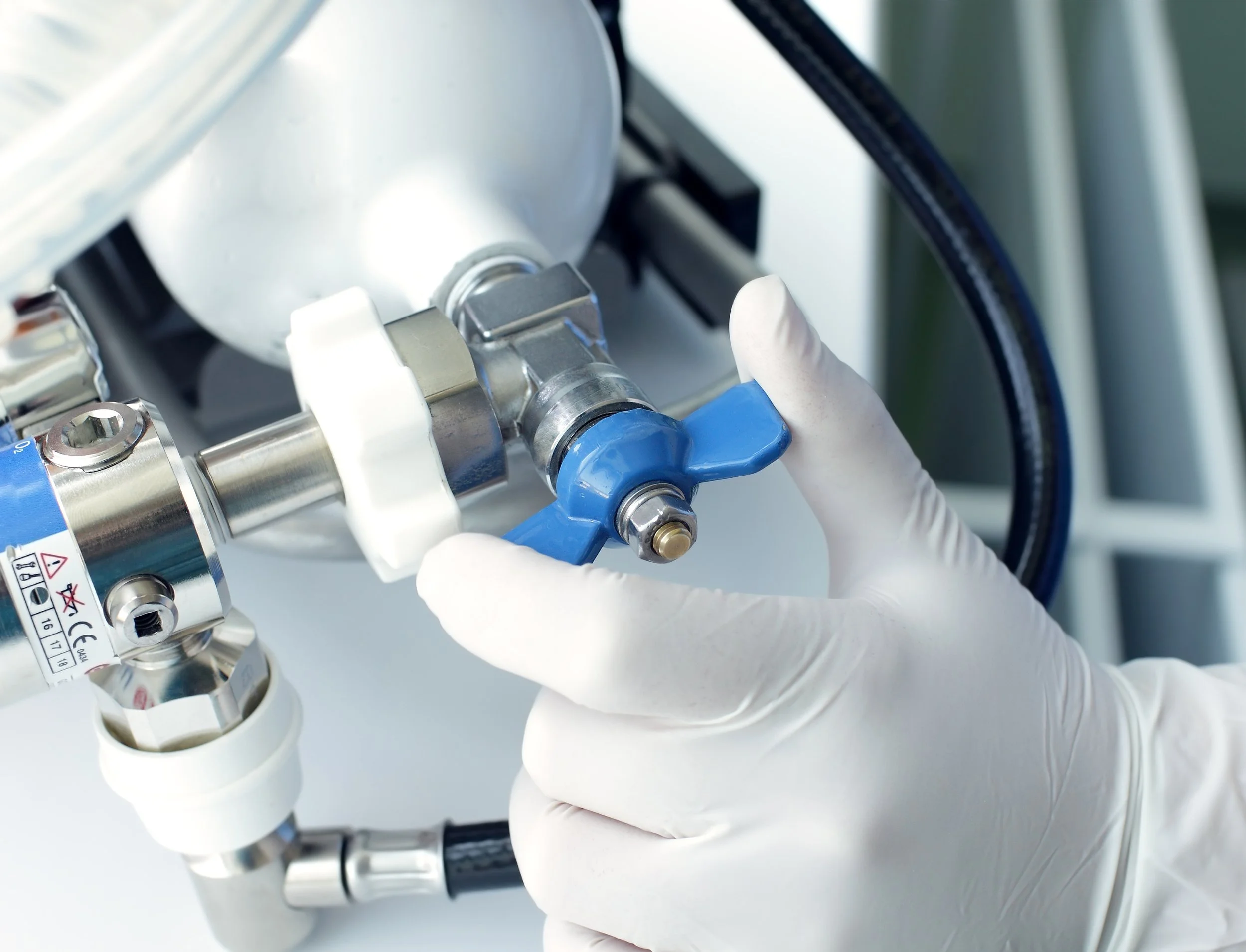
Medical gas system failures in the Dallas-Fort Worth metroplex are not merely maintenance headaches—they are "never events." A loss of medical vacuum or a drop in oxygen pressure can shut down operating rooms, delay life-saving surgeries, and expose general contractors to significant liability.
At IMSI Mechanical, we provide 24/7 emergency response for mission-critical healthcare infrastructure. Our ASSE-certified teams have identified a recurring set of failure points unique to the North Texas climate and the high-utilization rates of DFW’s major medical centers. This guide provides the technical breakdown and preventative measures required to ensure these systems remain "Always On."
1. Alarm and Pressure Sensor Failures: The DFW Dust Factor
In the rapidly growing North Texas corridor, construction dust and high ambient humidity are the primary enemies of sensitive medical gas electronics. We frequently see "sensor drift" in master panels and zone valve boxes in facilities near active DFW construction sites.
- The Problem: Microscopic dust particles infiltrate the transducer housings, causing false alarms or, more dangerously, delayed responses to genuine pressure drops.
- The Repair Process: 1. Isolate the affected zone using the Zone Valve Box (ZVB).
- Cross-verify the digital readout against a calibrated analog master gauge.
- Clean electrical contacts with isopropyl alcohol and replace transducers if drift exceeds 2% of the set point.
- Perform a 24-hour trend test before returning the zone to clinical service.
- Prevention: We recommend quarterly sensor cleaning and annual recalibration by an ASSE 6030 Verifier. For high-acuity areas, we install remote-monitoring packages that alert facilities teams via mobile app before an alarm threshold is even reached.
2. Brazed Joint Leaks and Structural Shifting
The "Black Giant" clay soil of North Texas does not just affect foundations; it places immense stress on rigid medical gas piping. When combined with thermal expansion from 100°F+ summers, even high-quality silver-brazed joints can develop micro-leaks over time.
- The Risk: A leak in a sterile environment like a surgery center in Plano or a NICU in Fort Worth requires an expensive, high-containment repair.
- The Engineering Fix: During repairs, we implement Nitrogen Purge Brazing to prevent internal oxidation. To prevent recurrence, we install flexible stainless-steel connectors and expansion loops every 50 feet in long horizontal runs to absorb building movement.
- Detection: We utilize ultrasonic leak detection during annual surveys to find "silent" leaks before they trigger a system-wide low-pressure alarm.
3. Vacuum Pump and Medical Air Compressor Breakdowns
Dallas-Fort Worth healthcare facilities often operate at higher-than-average capacities. This leads to accelerated wear on the "source equipment"—the heart of the medical gas system.
- Common Issues: Bearing failure due to heat and oil contamination in medical air lines.
- The Professional Standard: We implement quarterly oil analysis and vibration monitoring for all pumps.
- Redundancy Is Key: We specify and maintain Duplex or Triplex systems with automatic switchover logic. If one pump fails in an Arlington ASC, the secondary unit must engage instantly without a drop in line pressure.
- Safety Integration: We recommend installing high-sensitivity dew-point and Carbon Monoxide (CO) monitors that automatically shut down compressors if air purity is compromised.
4. Manifold and Cylinder Switchover Failures
The automatic switchover manifold is what ensures a hospital never runs out of gas when a primary cylinder bank is depleted. In DFW, hard-water condensate in mechanical rooms can cause these pneumatic valves to stick.
- The Repair: Full disassembly and rebuilding of the regulator and switchover diaphragms.
- The Prevention: Scheduling semi-annual "exercise tests" where the system is manually forced to switch banks to ensure the valves have not seized. We also install upstream high-efficiency filters to catch debris before it reaches the manifold seats.
Proactive Maintenance: The Contractor’s ROI
General contractors who include a structured maintenance plan in their project handover provide immense value to the owner. IMSI Mechanical offers three specialized tiers:
- Tier 1 (Ambulatory/Clinic): Quarterly alarm testing and sensor calibration to ensure "Day 1" accuracy.
- Tier 2 (Hospital/Surgical): Semi-annual full-system verification, including pump lead/lag testing and purity analysis.
- Tier 3 (Critical Care): 24/7 remote monitoring with a 2-hour emergency arrival guarantee for Level 1 Trauma centers and NICUs.
The Financial Impact:
Preventative maintenance typically costs between $0.45 and $0.85 per square foot per year. However, it reduces emergency repair expenses by 75% and prevents Joint Commission "Type 1" findings that can jeopardize a facility’s accreditation and revenue stream.
Conclusion: Protecting the Healthcare Infrastructure
In the competitive North Texas market, your reputation as a general contractor is tied to the long-term reliability of the complex systems you build. By addressing regional challenges—like soil movement and environmental dust—through proactive medical gas care, you protect the patients and the provider’s bottom line.
Ready to safeguard your next healthcare build? Contact us for a free system health assessment, ASSE-certified verification, or custom maintenance specifications for your project handover.