
Common Commercial Plumbing Repairs and Maintenance
Tips in Dallas-Fort Worth for General Contractors
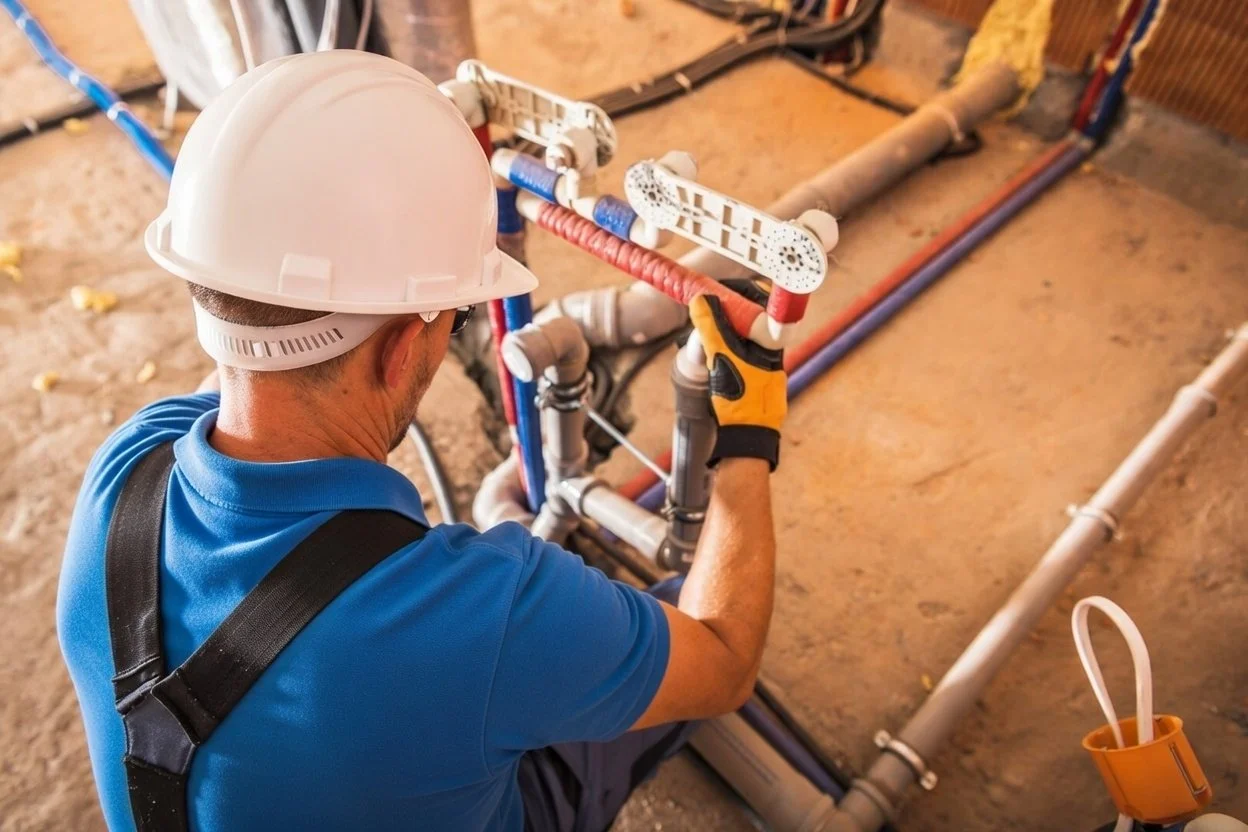
Plumbing emergencies during peak construction or building occupancy in North Texas can cost commercial general contractors thousands of dollars in downtime, water damage claims, and strained client relationships. In an environment with highly mineralized water and volatile soil, the plumbing system is under constant mechanical stress.
At IMSI Mechanical—a veteran-owned specialist in North Texas mechanical systems—we provide 24/7 emergency response for mission-critical facilities. We see the same recurring failures across hundreds of DFW commercial buildings every year. This guide identifies the top failure points and the proactive maintenance strategies required to eliminate them before they impact your operations.
1. Hard-Water Scaling: The DFW Infrastructure Tax
The municipal water supply in the Dallas-Fort Worth metroplex is notoriously hard. High concentrations of calcium and magnesium cause rapid mineral "scaling" inside pipes, heat exchangers, and fixtures.
- The Impact: Scaling typically appears within 2–3 years, reducing flow rates and forcing water heaters to work harder to penetrate the mineral barrier. This leads to noisy "kettling" in boilers and premature failure of solenoid valves in sensor faucets.
- The Professional Fix: Repairs require chemical descaling or full system flushing. For advanced cases, pipe section replacement is necessary.
- Prevention: Prevention starts at the design stage with point-of-entry water softeners or electronic scale-inhibitor systems. IMSI Mechanical recommends annual flush-and-test protocols to remove buildup before it calcifies.
2. Pipe Failures and the "Black Giant" Clay Soil
North Texas is famous for its expansive clay soil, which expands and contracts dramatically based on seasonal moisture. This movement creates immense shear force on rigid underground piping, leading to cracked sanitary lines and stressed copper joints.
- The Common Failures: We frequently see breaks in underground sanitary and storm lines where the building slab meets the soil.
- Engineering Standards: For new builds, we specify flexible PEX piping with expansion loops every 50 feet and concrete thrust blocks at every direction change.
- Retrofit Solutions: For existing buildings, we utilize trenchless CIPP (Cured-In-Place Pipe) lining. This creates a "pipe within a pipe" that is flexible enough to absorb ground movement without bursting.
3. Grease Interceptor and Sanitary Line Blockages
In DFW’s high-density retail and mixed-use developments, grease and solids are the leading causes of sanitary backups. When an interceptor fails, the resulting foul odors and health-code violations can shut down a facility for days.
- The Problem: Many commercial kitchens utilize undersized interceptors that meet minimum code but fail under real-world "peak" loads.
- Proactive Strategy: We recommend sizing interceptors 25% larger than code minimum and scheduling professional hydro-jetting every 90 days.
- Smart Monitoring: Installing automatic grease-removal units (AGRUs) and upstream strainers can prevent 90% of common blockages.
4. Backflow Prevention and TCEQ Compliance
Failed check valves or relief ports in backflow assemblies trigger immediate TCEQ (Texas Commission on Environmental Quality) violations. Because these devices are exposed to DFW’s hard water, mineral buildup often prevents the internal "checks" from sealing correctly.
- The Risk: A failed backflow preventer can result in an immediate water-service shutoff by the utility, halting construction or business operations.
- Compliance Protocol: We mandate annual certified testing by licensed technicians. To extend the life of these assemblies, we install upstream sediment strainers that protect the delicate internal rubber components from pipe scale and debris.
5. Thermal Stress and Winter Vulnerabilities
While North Texas winters are generally mild, the "hard freeze" events of recent years have exposed vulnerabilities in unheated warehouses and rooftop mechanical rooms.
- Vulnerable Points: Exposed rooftop lines, attic piping, and exterior backflow covers are the primary failure points.
- Hardening the System: We specify heat-trace cabling and insulation rated for sub-freezing temperatures on all exterior piping. For critical facilities, we integrate automatic shut-off valves tied to ambient temperature sensors to drain vulnerable lines before a freeze occurs.
Proactive Maintenance: The Contractor’s ROI
General contractors who treat commercial plumbing maintenance as a standard project requirement rather than an afterthought protect their margins and their reputations.
Service Tiers for DFW Assets:
- Industrial & Warehouse: Quarterly service focusing on water softener regeneration, grease-trap pumping, and video pipe inspections.
- Class A Office & Retail: Semi-annual system tune-ups, including backflow certification and sensor-faucet calibration.
- Healthcare & Critical Care: 24/7 monitoring with monthly diagnostic sweeps to ensure zero downtime.
The Financial Impact:
Preventive maintenance typically costs between $0.25 and $0.55 per square foot per year. Data shows this investment reduces emergency repair expenses by 70% and lowers water bills by 15–25%. Most clients recover the entire investment within the first 8–10 months of the program.
Conclusion: Engineering for Longevity
In the competitive North Texas market, building owners are looking for partners who can deliver a reliable, low-maintenance asset. By addressing DFW-specific challenges—like hard water and shifting soil—through proactive commercial plumbing care, you protect the building's infrastructure and the owner's bottom line.
Ready to protect your next project? Contact us for a system health assessment, video pipe inspections, or custom maintenance specifications for your project handover.