
Compliance and Annual Testing for Commercial Backflow Prevention in DFW
Tips for DFW General Contractors
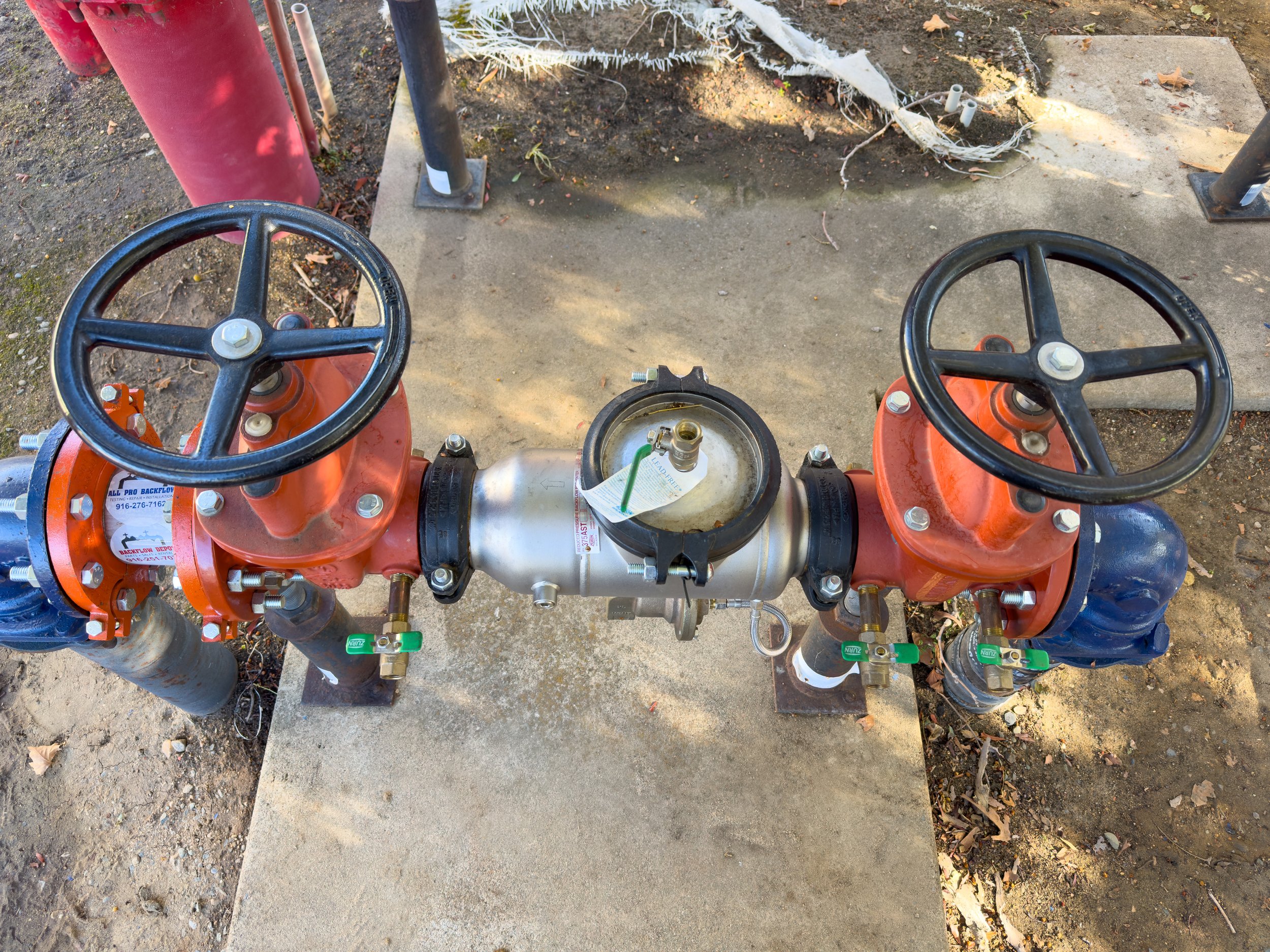
In the Dallas-Fort Worth metroplex, a commercial backflow prevention system is not a "set-it-and-forget-it" asset. Compliance is a continuous cycle. Between strict TCEQ (Texas Commission on Environmental Quality) mandates and the evolving cross-connection control programs of the NTMWD, Dallas Water Utilities, and Fort Worth Water, general contractors must ensure their projects are designed for easy, long-term annual certification.
At IMSI Mechanical—a 100% veteran-owned SDVOSB—we bring NASA-level precision to the lifecycle of backflow prevention. This guide outlines the compliance best practices and testing protocols necessary to protect your clients from water-service shutoffs, $5,000-per-day fines, and liability risks in the demanding North Texas climate.
1. The Regulatory Landscape: TCEQ vs. Local AHJs
While the TCEQ sets the baseline for backflow prevention in Texas, local Authorities Having Jurisdiction (AHJs) in DFW—such as the City of Plano, Frisco, or Fort Worth—often have stricter local amendments.
- BPAT Licensing: All testing must be performed by a licensed Backflow Prevention Assembly Tester (BPAT). At IMSI, we ensure every technician holds the specific endorsements required for high-hazard environments.
- Customer Service Inspections (CSI): For new construction, a CSI is often required before permanent water service is granted. This ensures that no illegal lead-solder or cross-connections exist in the system.
- Reporting Portals: Most DFW municipalities now utilize third-party reporting portals (such as BSI Online or SC Tracking). Failing to upload a passing test report to these portals on time can result in immediate service termination for the building owner.
2. Compliance-Driven Device Selection
In North Texas, compliance is often dictated by the chemical makeup of our water. The high calcium and magnesium content (hard water) can "freeze" the internal check valves of an assembly, leading to a failed annual test within just 12 months.
- High-Hazard (RPZ Assemblies): Required for hospitals (Baylor Scott & White, Methodist Dallas), chemical processors, and any facility where back-pressure could introduce toxic contaminants. We specify stainless-steel internal components to resist the mineralization common in DFW.
- Moderate-Hazard (DCVA Assemblies): Used for Class A office towers and retail in Legacy West or Addison. These protect against non-toxic "nuisance" backflow but must still be tested annually to ensure the spring-loaded checks are holding pressure.
- Irrigation (PVB/SVB): In the Alliance and I-35 corridors, these are standard for warehouse landscaping. They must be installed 12 inches above the highest piping to remain in compliance with hydraulic laws.
3. Installation Best Practices for Long-Term Testing
A common mistake is installing an assembly in a location that is impossible to service. If a tester cannot access the test cocks, the system will fail its certification by default.
- Clearance Requirements: TCEQ and local DFW codes require a minimum of 12 inches of clearance on all sides of the assembly.
- Safety & Accessibility: For assemblies installed in ceilings or high-wall locations (common in downtown Dallas retrofits), we install permanent access platforms or catwalks.
- Freeze Protection: An assembly that freezes and cracks is a major compliance violation. We utilize heat-trace cabling and NEMA-rated enclosures to ensure the system survives North Texas "Blue Norther" cold fronts.
4. The Annual Testing Protocol: What to Expect
Every commercial backflow assembly in DFW must be tested upon installation and then annually thereafter. IMSI Mechanical follows a rigorous 5-step testing protocol:
- Notification & Portal Check: We verify the specific reporting requirements of the local water district (e.g., NTMWD or DWU).
- Visual Inspection: We check for external leaks, corrosion, and the integrity of the freeze-protection enclosure.
- Hydrostatic Differential Testing: Using calibrated gauges, we measure the pressure drop across the check valves and ensure the relief valve (on RPZ units) opens at the correct differential (2.0 psi).
- Cleaning & Repair: If a test fails due to DFW hard-water scaling, we perform on-site cleaning of the valve seats and discs.
- Digital Submission: We upload the passing BPAT report to the municipal portal immediately, ensuring the building remains in good standing.
5. Integration with Fire and Life Safety Systems
In many DFW projects, the backflow preventer is tied directly to the fire suppression system.
- Tamper Switches: We coordinate with electrical and fire-alarm trades to ensure that the shut-off valves on the backflow assembly are monitored. If a valve is closed, it must trigger a "trouble" signal at the fire-alarm control panel.
- Uninterrupted Service: For critical facilities (hospitals or data centers), we install Parallel Assemblies. This allow us to test one unit while the other provides continuous water service to the building.
Conclusion: Ensuring Long-Term Compliance
General contractors who prioritize the compliance and serviceability of backflow prevention deliver a better product to the owner. By addressing the mineral and geological challenges of the DFW area upfront, you reduce the risk of future TCEQ violations and emergency shutoffs.
Ready to partner on your next build? Contact us for expert pre-construction support, BPAT-certified annual testing, and flawless mechanical execution.