
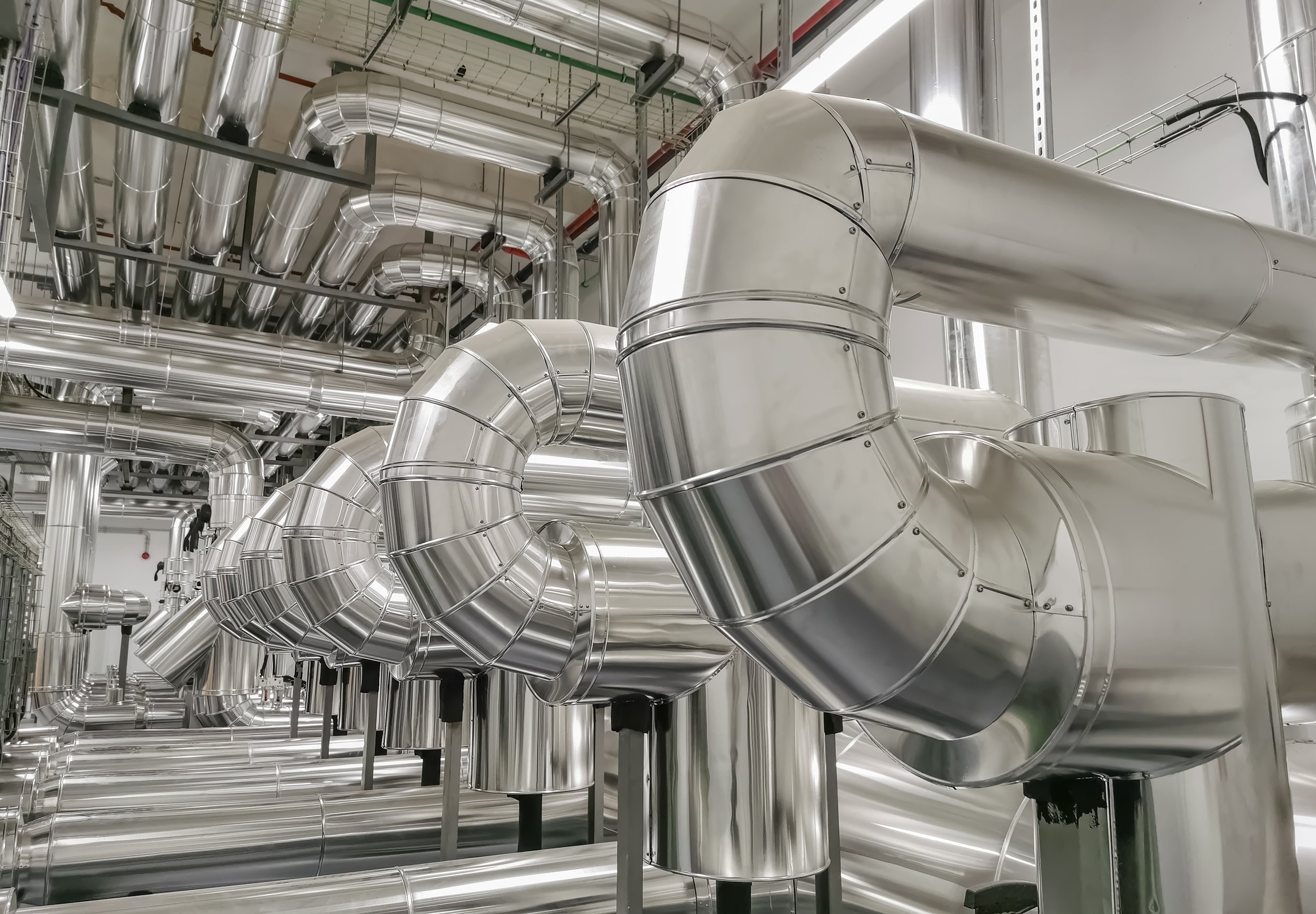
Comprehensive Guide to Commercial HVAC Systems in the DFW Area
Insights from IMSI MechanicalStrategic Insights for General Contractors, Facility Managers, and North Texas Developers
In the Dallas-Fort Worth (DFW) Metroplex, the mechanical system of a building is its most critical life-support structure. As a leading provider of mission-critical solutions, IMSI Mechanical understands that for commercial general contractors, the HVAC system is often the highest-risk component of a construction project.
Whether you are overseeing the expansion of a high-tech data center in Richardson, a healthcare facility in the Dallas Medical District, or a sprawling logistics warehouse in South Fort Worth, this guide provides the technical depth and local expertise required to deliver projects on time, on budget, and up to code.
I. The DFW Climate Factor: Engineering for North Texas Extremes
To understand commercial HVAC in North Texas, one must first understand the "DFW Microclimate." We are situated in a humid subtropical region characterized by rapid, violent temperature swings and prolonged thermal stress.
1. The 100-Degree Ceiling and Design Temperatures
DFW averages roughly 20 days per year over 100°F, but recent summers have seen that number nearly double. For a commercial HVAC system, the Design Temperature—the peak load the system is guaranteed to handle—must be calculated with surgical precision.
If a system is under-sized, the compressor will run at 100% duty cycle, leading to "burnout" within 3–5 years. If it is over-sized, the system will "short cycle," cooling the air too quickly without removing moisture, leaving the indoor environment humid and prone to microbial growth. IMSI Mechanical utilizes Manual N and Manual Q equivalent calculations tailored specifically to the North Texas solar gain profiles.
2. The Humidity-Mold Nexus
North Texas humidity fluctuates wildly between the morning and afternoon. During the spring and autumn "shoulder seasons," high humidity combined with mild temperatures (70°F–75°F) can lead to indoor air quality (IAQ) disasters. We design integrated dehumidification cycles that manage Latent Heat (moisture) independently of Sensible Heat (temperature), protecting sensitive building materials and ensuring occupant health in high-density office environments.
3. Resilience Against the "Blue Norther"
While cooling dominates the conversation, the "Big Freeze" events of recent years have highlighted the necessity of heating resilience. In DFW, we cannot rely solely on ambient air heat pumps. IMSI Mechanical integrates auxiliary electric heat or high-efficiency boiler backups to ensure that during sub-zero spikes, commercial plumbing is protected and facility operations remain uninterrupted.
II. Strategic HVAC Architectures for Commercial Use Cases
Choosing the right mechanical architecture is a balance of upfront CapEx and long-term OpEx. IMSI Mechanical evaluates the "mission" of your facility to recommend the most durable architecture.
1. Variable Refrigerant Flow (VRF) and VRV Systems
VRF technology is the "Swiss Army Knife" of DFW commercial HVAC, particularly for the influx of mixed-use developments in Frisco and Plano.
The Technology:
These systems move refrigerant directly to the zone that needs it, rather than moving massive volumes of air through ducts.
The DFW Advantage:
- In a glass-curtain wall building in Downtown Dallas, the sunny side may need cooling while the shaded north side needs heating.
- VRF systems can "heat recover," moving warmth from one zone to another with near-zero energy waste.
- Because VRF systems use small-diameter copper piping, they are the premier choice for retrofitting DFW’s historic 1920s-era commercial buildings where duct space is non-existent.
2. Chiller Plants and Cooling Towers
For high-rise office towers and massive industrial campuses, chilled water systems remain the gold standard for sheer cooling capacity.
Air-Cooled vs. Water-Cooled:
- Water-cooled towers deliver the highest efficiency but require careful water management in North Texas.
- Modern air-cooled chillers offer lower maintenance and water independence.
- IMSI Mechanical helps GCs weigh both options against regulatory and operational needs.
Redundancy Protocols:
We design "N+1" or "N+2" redundancy into chiller plants so that if one chiller fails during a 105°F July afternoon, the building’s mission-critical data or occupants remain unaffected.
3. Rooftop Units (RTU) and Packaged Systems
Common in retail and "big box" industrial sites, RTUs are cost-effective but highly vulnerable to the Texas elements.
Hail Protection:
DFW is located in "Hail Alley." Standard condenser coils are easily crushed by 1-inch hail. IMSI Mechanical recommends and installs custom-fitted heavy-duty hail guards—a small upfront investment that prevents a total loss during a spring supercell.
High-Static Applications:
In large-scale warehouses (300,000+ sq. ft.), we utilize high-static fans to ensure conditioned air reaches the floor level in facilities with 50-foot clear heights.
III. Specialized Environments: Healthcare and Aerospace Precision
IMSI Mechanical’s leadership, including Ken Christensen, brings a background in aerospace-grade protocols (NASA) to the commercial job site. This "zero-failure" mindset is essential for specialized sectors.
1. Healthcare and Medical Gas Integration
In DFW’s booming healthcare sector (UT Southwestern, Baylor Scott & White), HVAC is a life-safety system.
- Pressure Regulated Environments: Precise airflow controls maintain positive pressure in operating rooms and negative pressure in isolation wards.
- Med-Gas Synergy: As specialists in medical gas piping, we ensure mechanical HVAC systems and life-support gases (Oxygen, Medical Air, Vacuum) integrate without vibration interference or cross-contamination.
2. Data Centers and Mission-Critical Infrastructure
DFW is one of the top three data center markets in the United States. In these environments, cooling is the primary operational expense.
- CRAH and CRAC Units: We implement Computer Room Air Handler (CRAH) systems that utilize chilled water loops for maximum heat rejection.
- Aisle Containment: Hot/cold aisle containment prevents air-stream mixing, allowing the HVAC system to operate at a much higher efficiency point (PUE).
IV. The General Contractor’s Lifecycle: From RFI to Close-Out
For a General Contractor, the mechanical contractor can either be your greatest ally or your biggest bottleneck. IMSI Mechanical acts as a proactive partner to mitigate risk.
1. Pre-Construction and Design-Assist
The most expensive mistakes happen on paper. By involving IMSI Mechanical in the Design-Assist phase, we identify "clashes" in 3D BIM before a single hanger is installed. This eliminates the "RFI Lag" that often stalls projects during the mechanical rough-in.
2. Navigating the Texas Energy Code (IECC)
Texas has adopted rigorous energy codes to manage the strain on the ERCOT electrical grid.
- Economizer Requirements: We ensure your project meets the IECC requirement for air-side economizers, which allow for "free cooling" when DFW outdoor temperatures drop below 55°F.
- Certified TAB (Testing and Balancing): We provide the certified TAB reports required by building inspectors in cities like Arlington, Irving, and Dallas to secure your Certificate of Occupancy.
V. Maintenance Strategies: Protecting the 20-Year Asset
A commercial HVAC system is a multi-million dollar asset. In the DFW climate, a lack of maintenance can reduce its lifespan by 50%.
1. The "Quarterly Texas Tune-Up"
- Chemical Coil Cleaning: Texas cottonwood seeds and highway dust act as an insulation layer on coils. Chemical cleaning restores heat transfer efficiency, lowering electricity bills by up to 30%.
- Refrigerant Leak Detection: With the phase-out of R-410A, refrigerant costs are skyrocketing. We utilize ultrasonic leak detection to find "micro-leaks" before they cause a system shutdown.
- Electrical Torque Checks: Extreme heat causes metal expansion and contraction, which loosens electrical lugs. We retorque all high-voltage connections to prevent arc flashes and fire hazards.
2. Building Automation Systems (BAS)
We transform "dumb" mechanical units into "smart" assets. By integrating a modern BAS (Tridium/Niagara or similar), facility managers can monitor an entire North Texas portfolio from a single dashboard.
VI. Why IMSI Mechanical? The Veteran-Led Difference
Under our ownership (established October 2024), IMSI Mechanical has redefined what it means to be a mechanical partner in North Texas.
- 100% Veteran-Owned & SDVOSB: We bring the discipline of military operations and the precision of aerospace engineering to every job site.
- Cleared Personnel: Our team holds the security clearances required for restricted-access sites, including DFW International Airport, federal courthouses, and secure financial data centers.
- Accountability Clauses: We understand that "Time is Money." We offer guaranteed response times and project milestones backed by financial accountability—because your timeline is our mission.
VII. Frequently Asked Questions
Q: What is the most efficient HVAC system for a large North Texas warehouse?
A: For high-volume industrial spaces, we recommend high-efficiency Rooftop Units (RTUs) paired with High-Volume Low-Speed (HVLS) fans to destratify air and reduce the cooling load on the mechanical units.
Q: How often should coils be cleaned in the DFW area?
A: Due to heavy spring pollen and high levels of construction dust, coils should be inspected quarterly and chemically cleaned at least twice per year—typically once in the spring (pre-summer) and once in the late autumn.
Q: Does IMSI Mechanical provide 24/7 emergency repairs?
A: Yes. We provide 24/7 emergency response for all contract partners, with a focus on mission-critical facilities where downtime is not an option.
Conclusion: Partnering for the Future of North Texas
The DFW skyline is growing at an unprecedented rate. At IMSI Mechanical, our goal is to ensure that the infrastructure inside those buildings is as resilient as the people who build them. From the first RFI to the final commissioning report, we provide the transparency and technical skill that turns a blueprint into a high-performance environment.
Secure Your Mission-Critical Infrastructure
Don’t leave your mechanical systems to chance. Partner with a veteran-led team that treats your project’s success as a mission.