
Updated Backflow Prevention Requirements
For DFW Airports, Government Buildings, and High-Hazard Facilities in 2026
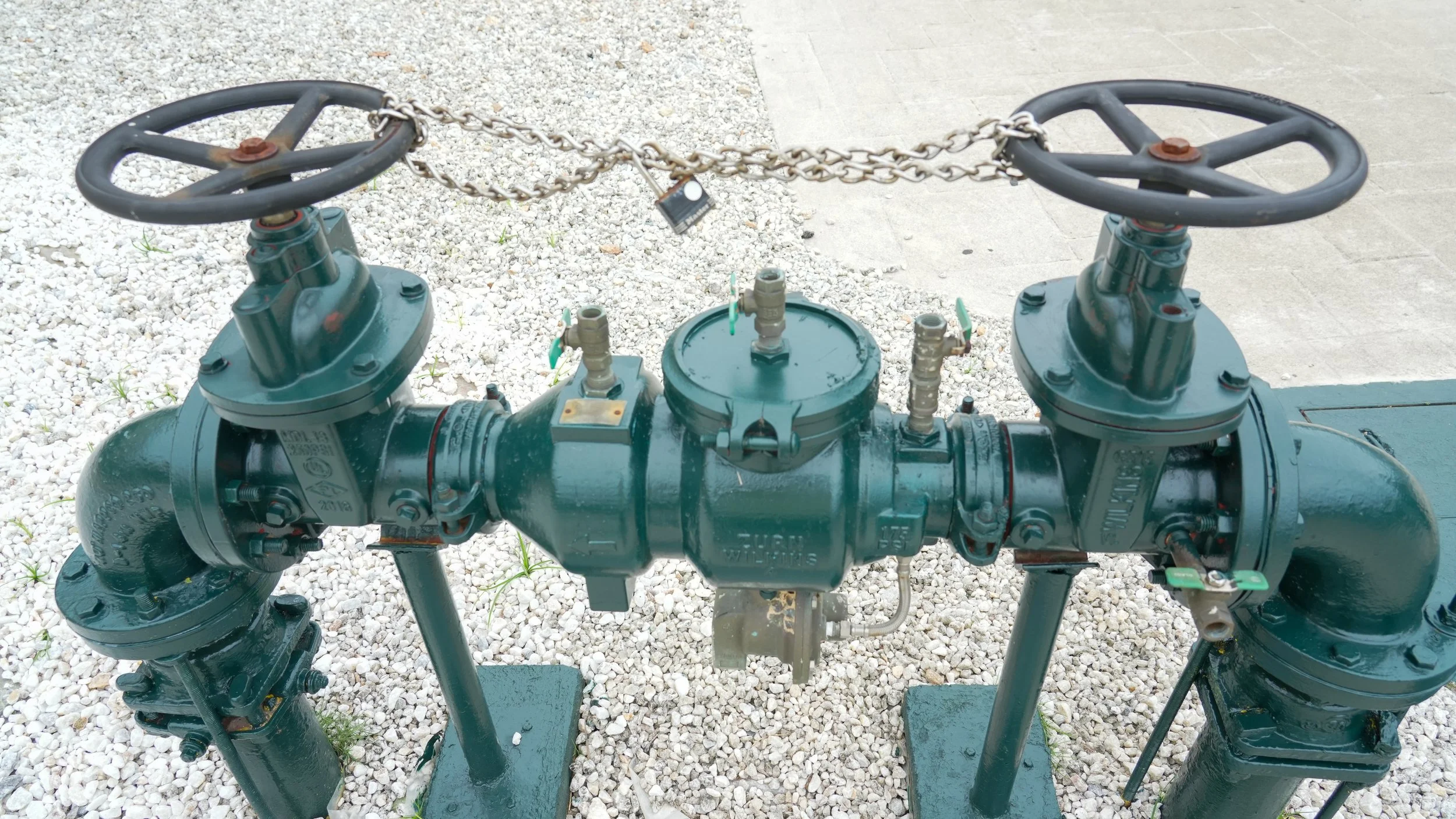
Protecting the public potable water supply from backflow contamination is non-negotiable in commercial Texas settings, where cross-connections can lead to serious health risks, regulatory violations, and costly shutdowns. As of March 2026, the Texas Commission on Environmental Quality (TCEQ) continues to enforce its Cross-Connection Control and Backflow Prevention Program under 30 TAC Chapter 290 (Subchapter D), with no sweeping legislative overhauls but significantly ramped-up enforcement through digital reporting portals, increased audits, and stricter penalties for non-compliance. High-hazard facilities—including airports, government buildings, hospitals, chemical manufacturing plants, laboratories, and industrial sites—must install and maintain high-grade backflow prevention assemblies (primarily reduced-pressure principle or RP devices) and submit to annual testing by licensed Backflow Prevention Assembly Testers (BPATs).
In the Dallas-Fort Worth metroplex, local water utilities (Dallas Water Utilities, Fort Worth Water Department, and North Texas Municipal Water District) layer on jurisdiction-specific requirements aligned with TCEQ rules. For example, Fort Worth mandates RP assemblies at commercial service connections where end-use is undetermined or high-hazard (per City Code §12.5-528), while Dallas requires permits for all new installs, relocations, or replacements. General contractors handling expansions (e.g., DFW Airport terminal upgrades or new government facilities in Plano) and facility managers at high-risk sites (e.g., manufacturing plants in Grand Prairie or chemical facilities near Alliance) face heightened scrutiny amid regional growth—failure to comply can trigger fines up to $5,000 per day per violation, service interruptions, or liability in contamination events.
As a 100% veteran-owned Service-Disabled Veteran-Owned Small Business (SDVOSB), IMSI Mechanical holds the necessary clearances and expertise to service secure sites like airports, government buildings, restricted healthcare areas, and industrial plants across North Texas. Our team delivers full-spectrum backflow solutions—design, installation, certification, testing, and maintenance—with a zero-defect, mission-critical focus. This in-depth guide outlines current requirements, best practices, and implementation strategies tailored to DFW's demanding commercial landscape.
Current TCEQ and DFW Regulatory Framework in 2026
TCEQ Rule 290.44 requires public water systems to implement cross-connection control programs, classifying hazards as health (high) or non-health (low). High-hazard facilities—those with chemicals, medical waste, fertilizers, or process additives—must use RP assemblies to prevent backsiphonage or backpressure contamination. Key mandates include:
- Installation of USC Foundation for Cross-Connection Control-approved assemblies sized per flow demands.
- Initial testing upon installation and annual re-testing by TCEQ-licensed BPATs.
- Submission of test reports to the local water provider (often within 10 business days via digital portals introduced in recent enforcement pushes).
- Customer Service Inspections (CSIs) for new construction, major remodels, or hazard changes.
- Record retention for at least 3 years, with on-site availability during audits.
DFW-specific nuances:
- Fort Worth: Requires RP at undetermined commercial end-uses or high-hazard connections; annual testing mandatory for all health-hazard assemblies regardless of property type.
- Dallas: Permits required through Development Services; incomplete/illegible test forms result in failed inspections.
- Airports/Government: Federal security protocols add layers—technicians need badges/clearances; de-icing fluids or lab chemicals classify as high-hazard.
Enforcement in 2026 emphasizes digital compliance tracking, with TCEQ and utilities conducting more frequent random audits on high-hazard sites.
Facility-Specific Requirements and Examples in North Texas
- Airports (e.g., DFW International): High-hazard due to fuel, de-icing chemicals (glycols), and maintenance fluids. RP assemblies required at hangar service entries and terminal connections; annual tests coordinated with FAA/security schedules to avoid operational delays.
- Government Buildings (e.g., county courthouses, federal facilities): Labs, irrigation, or HVAC makeup lines pose risks. RP or double-check assemblies at main service; testing timed with fiscal year audits to maintain funding compliance.
- Manufacturing/Industrial Plants: Process water cross-connections (e.g., cooling towers, chemical mixing) demand RP devices; integrate with fire suppression systems to prevent backflow during pressure drops.
- Healthcare-Related High-Hazard Ties: Coordinate with medical gas/vacuum systems to avoid vacuum-induced siphonage; hospitals often require RP at multiple points per TCEQ RG-478 guidance.
Real-world DFW example: A recent manufacturing facility retrofit in Arlington involved installing RP assemblies at process lines and service entry, followed by annual testing—preventing potential TCEQ violations during an audit and qualifying for utility incentives.
Comprehensive Implementation Checklist for Contractors and Managers
- Conduct Hazard Assessment: Use TCEQ RG-478 Appendix E to classify (high vs. low); document site-specific risks.
- Select and Size Assemblies: Choose USC-listed RP for high-hazard; calculate flow per IPC/Plumbing Code tables; factor in pressure loss.
- Obtain Permits and Approvals: Submit plans to local utility/Development Services; secure clearances for secure sites.
- Professional Installation: Use licensed plumbers or certified teams; place assemblies above grade, accessible, and freeze-protected (thermal enclosures common in North Texas).
- Initial Testing and Certification: BPAT tests post-install; repair/replace failures immediately (new assemblies fail ~10–15% out-of-box).
- Documentation and Reporting: Complete TCEQ Form-20700; submit digitally; maintain logs.
- Ongoing Compliance Calendar: Schedule annual tests 30–60 days before due date; perform quarterly visual inspections.
For multi-phase projects (e.g., airport expansions), phase installations to match construction zones.
Best Practices for High-Hazard Commercial Sites in DFW
- Install alarms/monitors for remote leak/backflow detection.
- Use stainless steel or high-grade brass to resist corrosion from hard water/chemicals.
- Encased buried lines in expansive clay soils (common in Tarrant/Collin counties).
- Integrate smart building systems for automated test reminders and reporting.
Common Pitfalls and Practical Solutions
- Missed Annual Testing Deadlines: Automate calendar alerts; partner with providers offering reminders.
- Improper Sizing/Selection: Always calculate based on peak demand; undersized assemblies cause pressure issues.
- Integration Conflicts During Remodels: Tie backflow into plumbing/HVAC upgrades during single shutdowns.
- Poor Record-Keeping: Adopt cloud-based systems for instant audit access.
- Freeze Damage in Rare Cold Snaps: Use insulated enclosures and heat tracing.
ROI and Risk Mitigation Benefits
Annual testing/maintenance: $500–$2,500 per assembly (depending on size/location).
Preventive value: Avoids $50,000–$500,000+ in contamination cleanup, fines, downtime, or liability claims.
Utility incentives: Some DFW providers offer rebates for compliant high-hazard upgrades.
Long-term: Extends system life, supports insurance discounts, and ensures uninterrupted operations.
Coordinating Backflow with Plumbing, HVAC, and Other Systems
Backflow devices often sit at service mains intersecting plumbing risers or HVAC makeup lines. Coordinate during retrofits to minimize multiple shutdowns—IMSI Mechanical's full-service model handles this seamlessly.
Rigorous Maintenance and Testing Protocols
- Quarterly: Visual checks for leaks, valve exercise, enclosure integrity.
- Annual: Full BPAT test (high-hazard mandatory); rebuild every 5 years or per manufacturer.
- Post-Event: Retest after freezes, pressure surges, or modifications.
- Documentation: Digital logs with photos, test reports, and certification dates.
Why Partner with IMSI Mechanical for DFW Backflow Needs
Our veteran-led team offers:
- Active security clearances for airports, government, and restricted sites.
- Comprehensive services: supply, install, test, certify, maintain.
- Proven track record with warehouses, manufacturing, hospitals, airports, schools, grocery stores, and government buildings.
These practices ensure your high-hazard facility remains compliant, safe, and operational in North Texas's growing regulatory environment. Compliance isn't optional—it's mission-critical.
Ready for an audit, installation, or annual testing? Contact IMSI Mechanical today for a consultation. Our licensed professionals deliver reliable, code-compliant backflow prevention solutions across Dallas, Fort Worth, and the metroplex—your trusted local partner for zero-defect results.